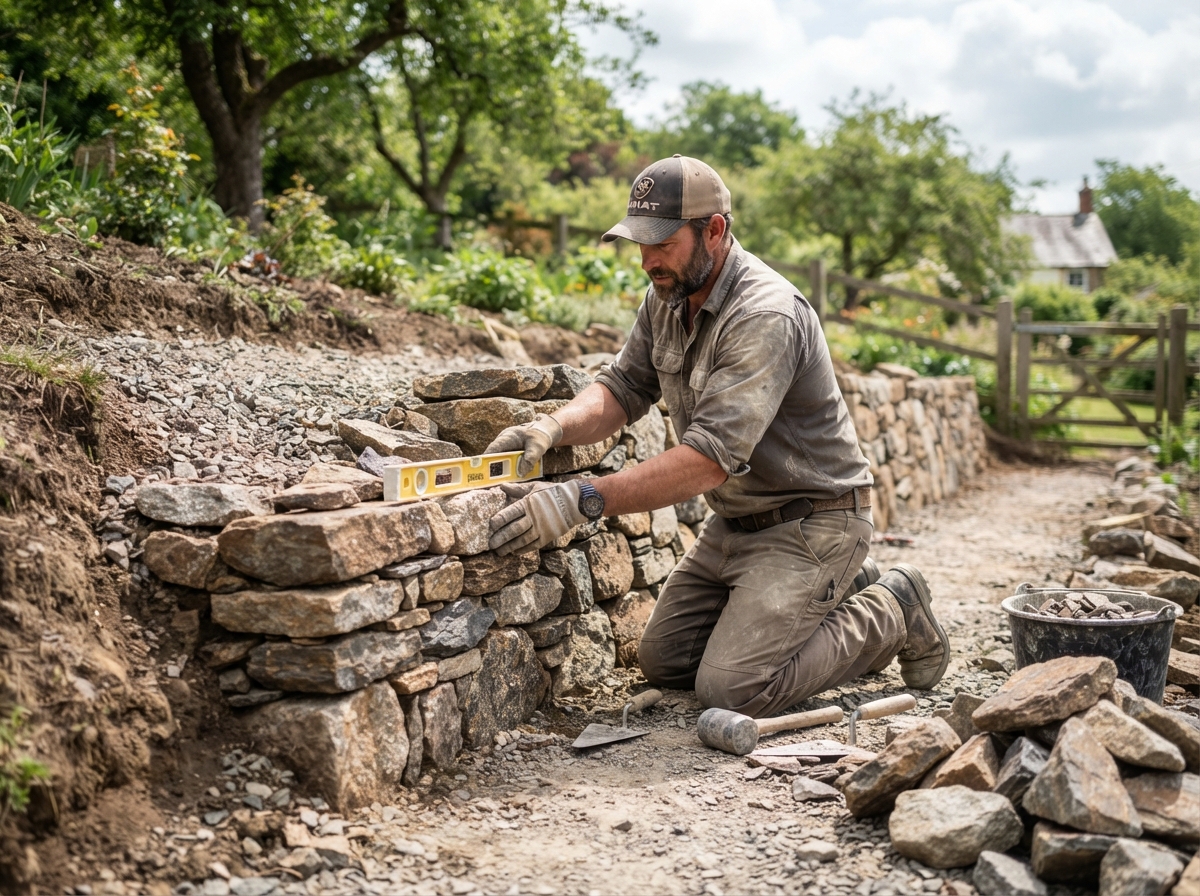
A retaining wall is a structure built to hold back soil at a change in grade, letting you create a level area on a slope or protect a lower section of yard from erosion above it. In the Little Rock area, retaining walls are most often needed on hillside lots, along driveways cut into a slope, or anywhere water runoff has started eroding an unsupported grade change.
You likely need a retaining wall if you're seeing soil sliding or eroding down a slope, if a existing structure like a shed or patio sits near an unsupported grade change, or if you want to create usable flat yard space out of a sloped lot. We also build retaining walls as part of larger projects, like leveling a yard for a new patio or creating a raised planting bed.
We build with segmental concrete block, natural boulders, or timber, depending on wall height, budget, and the look you want. Every wall starts with excavation into the existing slope to create a level base trench, followed by a compacted gravel leveling pad. We stack the wall material in courses, stepping each course back slightly for taller walls to add stability, and we install perforated drain pipe and washed drainage gravel behind the wall as we build, not as an afterthought once the wall is finished.
That drainage detail is the single biggest factor in whether a retaining wall lasts decades or fails within a few years. Trapped water behind a wall creates hydrostatic pressure that no amount of wall thickness can resist forever, so we grade the backfill and tie in the drain outlet to daylight or an existing drainage path before we consider the wall complete. Taller walls may require engineering review, which we'll flag during your free on-site assessment.
Wall height, material, and site access are the main cost drivers on a retaining wall project. A short garden wall under two feet is a straightforward build, while a taller engineered wall with extensive drainage and stepped courses takes more time and material. We'll measure your slope, discuss material options, and give you a written, itemized estimate before any excavation begins so you know exactly what the project involves.
Why Homeowners Choose This Service
- Segmental block, boulder, or timber options to match your budget and style
- Drainage installed behind every wall as it's built, not added later
- Stepped, engineered courses for stability on taller walls
- Creates usable flat yard space from a sloped lot
- We handle permitting and engineering review when your wall requires it
Retaining Wall Construction Questions
What's the best material for a retaining wall in Arkansas?
Segmental concrete block is the most common choice for its cost and consistency, while natural boulders suit a more naturalistic landscape and timber works for lower, budget-conscious walls. We'll recommend the right material based on wall height, soil, and your design goals.
How do I know if my retaining wall needs drainage?
Almost every retaining wall over roughly two feet tall needs drainage behind it. If you see water seeping through an existing wall's joints, or the wall is bulging, that's typically a sign drainage is missing or has failed.
Get a Free Retaining Wall Construction Estimate
Serving Little Rock, North Little Rock, Conway, Benton, Sherwood, and the surrounding metro.